95th AfWASA STC : Operators Share their Green Economy Solutions to Climate Change
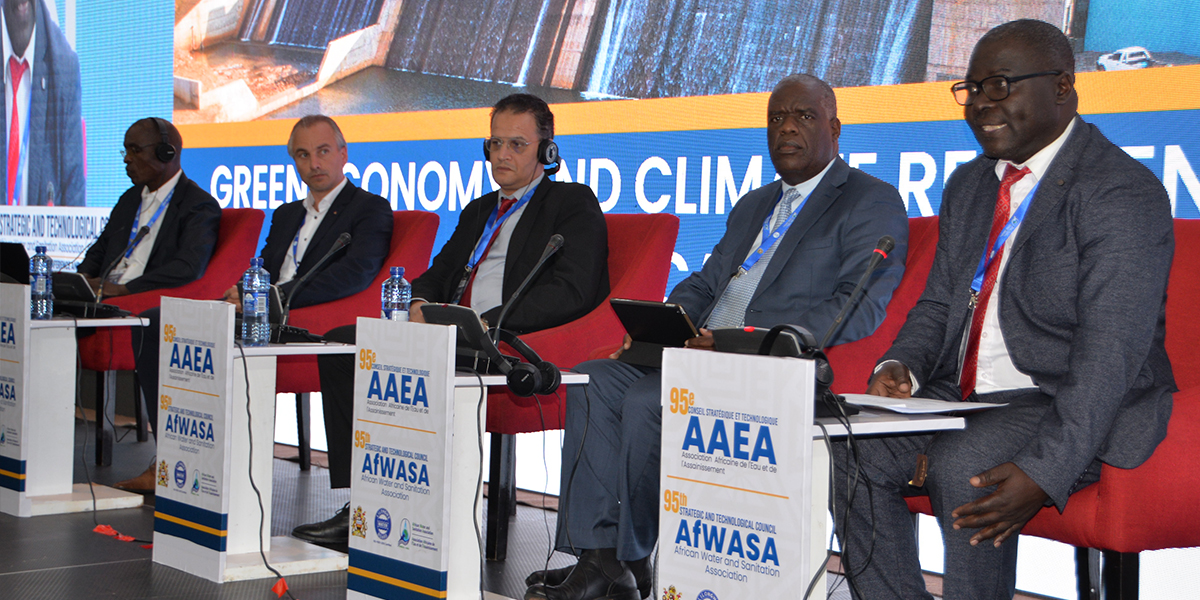
The technical session of the 95th Scientific and Technological Council of AfWASA, held on July 21 in Lilongwe, focused on the challenges of the green economy as applied to the water and sanitation sector. Moderated by Camille Dansou, WASH consultant and former Managing Director of Société NAtionale des Eaux du Bénin, the session featured rich and dynamic discussions.
Two keynote addresses provided the conceptual and strategic framework.
Mr. Mourad El KHALFANI, Senior Cooperation Officer at ONEE (Morocco), opened the session by highlighting the links between the green economy, climate resilience, and sustainable water management. He emphasized that the ecological transition is an opportunity to strengthen the performance and adaptability of public water and sanitation services.
Following him, Mr. Manuel Krauß, Head of the Africa Regional Section of the GWP, spoke about the strategic partnership with Germany. He presented the results of the AGTIWAS and GAPWAS projects and outlined prospects for enhanced cooperation between African and European stakeholders in the sector.
The session continued with a panel full of practical experience sharing:
Engineer Gustaff Chikasema (Lilongwe Water Board, Malawi) discussed local strategies for energy savings and reduction of Non-Revenue Water, identified as powerful levers for resilience.
Mr. Tontama Sanou (ONEA, Burkina Faso) shared progress made in faecal sludge valorization and sanitation solutions that support sustainable agriculture.
Lastly, Dr. Winford Masanjala (University of Malawi) concluded the session by stressing the importance of the macroeconomics of the green economy, highlighting the cross-cutting impact of the water sector in sustainable development policies.
In conclusion, this technical session of the 95th AfWASA STC showcased tangible initiatives and strategic approaches to embed green economy principles into water and sanitation management across Africa. Through diverse experiences, it demonstrated that innovation, regional cooperation, and local ownership are essential to making the WASH sector a driver of climate resilience and sustainable transformation.