23rd AfWASA International Congress and Exhibition: Women want to sustainably transform the water and sanitation sector in Africa
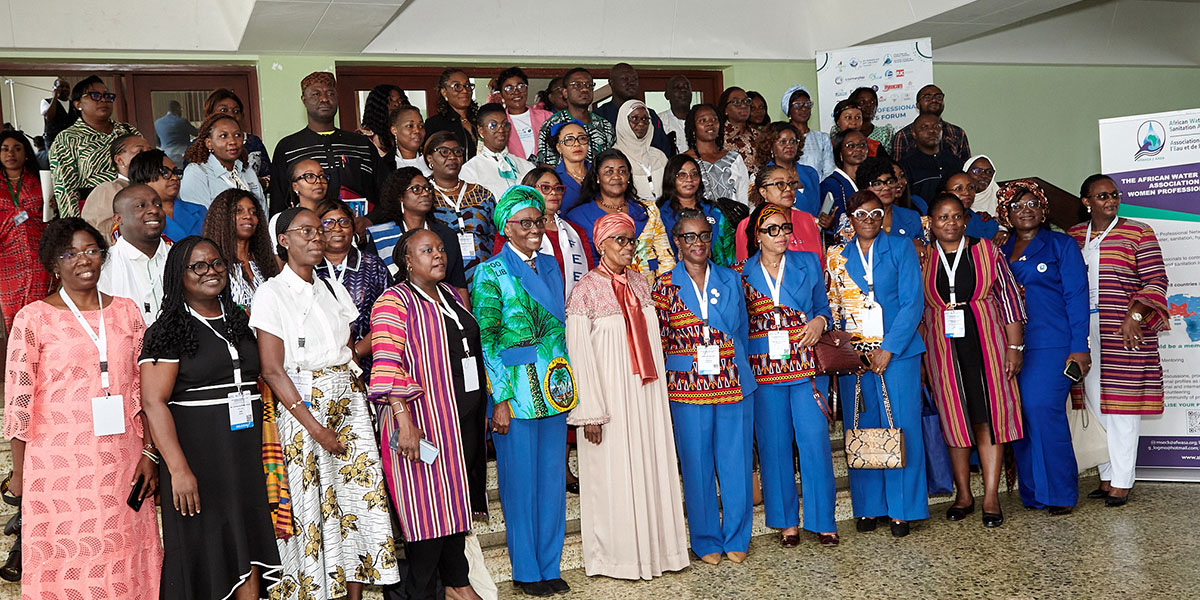
The 6th Forum of Women Professionals in the water, sanitation, and hygiene (WASH) sector was held on Tuesday, 10 February 2026, at the Palais des Congrès in Yaoundé, as part of the 23rd International Congress and Exhibition of the African Water and Sanitation Association (AfWASA). The event brought together women professionals from across the globe and established itself as a strategic space for dialogue, mobilization, and advocacy for fully recognized female leadership in the WASH sector.
The Forum aimed to assess the progress and functioning of AfWASA Women Professionals Network, examine the specific challenges faced by women in the sector—particularly within the water–climate–agro-environment nexus—and identify practical solutions in financing, partnerships, and inclusive governance. It was also an opportunity to present a newly co-designed project aimed at structuring and strengthening women’s professional networks across Africa.
The Forum’s agenda included testimonials, experience sharing, group work, and networking activities. These exchanges allowed participants to break isolation, reinforce solidarity, and foster new collaborations and concrete initiatives.
Discussions highlighted that women contribute more than 18% of the economic value and social impact of the WASH sector in Africa. Several speakers addressed obstacles to accessing technical and decision-making positions, the lack of recognition for women’s expertise, and challenges related to professional mobility and work–life balance. They also emphasized the importance of mentorship, experience sharing, and solidarity among women as essential levers to build confidence and pave the way for younger generations.
The Forum showcased the tangible impact of women-led projects, particularly in improving access to safe water, sanitation, and hygiene in communities. These initiatives, often developed with limited resources, demonstrate that when women are supported, the results are sustainable and inclusive.
In response to these findings, participants called for concrete and coordinated actions: strengthening training and professional capacities, developing financing mechanisms suited to women-led enterprises, promoting intergenerational mentorship, and raising awareness among young girls about technical fields from university onwards. The new project to structure the AfWASA women’s professional networks was also presented to amplify the impact of women’s initiatives across Africa.
At the conclusion of the Forum, it became clear that women’s inclusion is no longer optional but a strategic necessity for the water and sanitation sector in Africa. The 6th Women’s Forum sent a strong signal: women are ready to fully contribute to decision-making and strengthen their impact on the WASH sector.